

Missing a three-month revenue goal often traces back to a single unasked question during a discovery call. Without a strict plan, your reps rely on gut feel instead of hard data. High-growth tech companies solve this by using an expert-led qualification language. To qualify your pipeline today, Claim Your Assessment with our team.
To qualify your pipeline today, Claim Your Assessment with our team.Good MEDDPICC questions are the main tool used by elite sales teams to find deal gaps and improve forecast truth. These questions dive deep into metrics, economic buyers, and choice steps to ensure every deal in the pipeline is real and winnable. By asking focused questions, sales reps move from a passive checklist mindset to an active search phase that uncovers hidden pain and finds champions. This strict process helps revenue leaders focus their best assets on high-value deals while cutting "zombie deals" that bloat the pipeline and skew data. When your team masters this expert-led framework, you build a steady revenue engine that scales with the business using methods that helped PTC grow.
MEDDPICC Questions: What is the MEDDPICC Sales Methodology?
Key Takeaway: The MEDDPICC sales methodology is a structured qualification framework designed for enterprise tech sales. It helps revenue teams evaluate deal health, identify critical pipeline gaps, and verify buyer commitment with clinical precision.
The MEDDPICC sales methodology is a set of rules for tech sales teams. It helps sellers check if a deal is real or if they are wasting time. In big sales, you must deal with many people and many steps. This framework gives everyone a clear way to talk about deal health. It is not just a list of tasks. It is a way to find deal gaps before it is too late.
The roots of MEDDIC
This approach started in 1996 at a company called PTC. A sales leader named Dick Dunkel authored MEDDIC to help his team win. At the same time, David Boyle taught the very first class on this method. They did not want more theory. They wanted a way to win more deals by asking the right things.
At PTC, the results were huge. The company used this shared language to grow very fast. They went from $300 million in sales to more than $1 billion in just a few years. This success made other tech firms take notice. They saw that a common way to judge deals could lead to big gains in sales.
The growth of MEDDPICC
Over time, sales got more complex. Teams added new letters to the first list to cover more ground. The modern version stands for Metrics, Economic Buyer, Decision Criteria, Decision Process, Paper Process, Identify Pain, Champion, and Competition. Each part of the name stands for a key area you must know.
Some teams use six letters, and some use eight. You might see names like MEDDPIC or MEDDICC used by different firms. At RevCentric, we focus on the full eight-letter version to make sure no part of the deal is missed. This gives you a full view of the sale from start to end. The "P" for Paper Process and the second "C" for Competition are key in the market today. Knowing how a contract moves through a legal team is vital. You must also know who you are up against. Most pros now think this is the best way to do tech sales. It helps you ask effective MEDDPICC qualification questions in every meeting.
Why tech teams use it
Tech sales often need help from sales engineers to show how a tool works. These roles are key for building and deploying client solutions in software firms. When teams use a framework like this, they stay on the same page. The sales rep and the tech expert both know what a "good" deal looks like.
Using this method means you do not guess. You look for facts. You find out who has the money and who makes the final choice. This lowers the risk of deals failing at the last minute. It turns a messy sales cycle into a clear path to a win.
Why is Rigorous Pipeline Qualification Your Competitive Advantage?
Key Takeaway: Rigorous pipeline qualification prevents sales team resource waste by filtering out low-probability "hope" deals. By implementing a standardized qualification framework, sales leaders can raise win rates above 30% and accelerate new seller onboarding from 12 months down to 6-9 months.
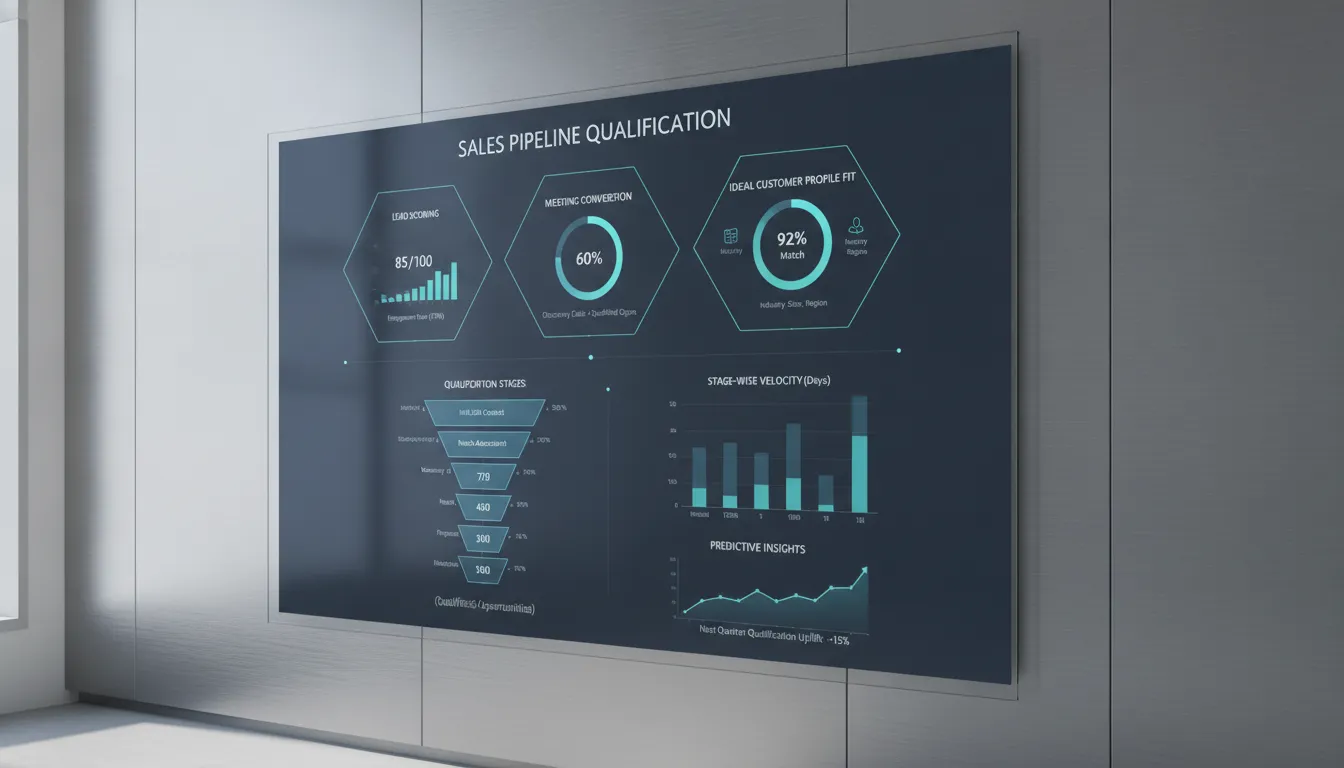
Most sales leaders live with a hard truth: a small group of people carries the whole team. This gap is not just about raw skill. It is about how sellers choose to spend their limited hours. When you use a strict system to check every deal, you stop guessing and start winning. This is how top teams build a lead over the market.
Close the 80/20 sales gap
In many firms, just 20% of the sales force makes 80% of the total results. This gap often happens because most sellers chase every lead that comes their way. They waste weeks on deals that will never close. Top sellers do the other thing. They use a strict filter to find real pain and real buyers early in the process.
By using a set of clear qualify your pipeline with MEDDPICC questions, you can spot deal gaps before they cost you time. This focus lets your team put their best work into the deals that have the highest chance to win. It turns your mid-tier sellers into high-value assets for the firm.
Speed up time to full success
New sellers often take a long time to reach their goals. In hard tech sales, the time to full success can often exceed 12 months. This long wait hurts your growth and puts your sales at risk. A shared system for checking deals helps new hires learn the ropes much faster.
When everyone uses the same language, coaching becomes simple and fast. Managers can see exactly where a new rep is stuck. They do not have to guess if a deal is real. They can just check the facts against the framework. This move cuts the learning curve and gets your new sellers to full results in a few months rather than a year.
The smart edge of better data
Weak checks lead to bad data and poor plans. Research shows that sales teams in large firms often see their deal close rates stay low, often near 20%. This happens when the pipeline is full of "hope" rather than real facts. Strict checks change this by clearing out the noise.
This clarity gives your firm a huge edge. You can forecast your sales with high trust. You can tell your product and marketing teams what buyers really care about. Most of all, you stop losing to the status quo because you found the real pain points first. Using MEDDPICC questions gives you the proof you need to commit your team with trust.
| Feature | Generic Qualification | MEDDPICC Qualification |
|---|---|---|
| Win Rates. | Stalls near 20%. | Targets 30% or higher. |
| New Rep Success. | Takes 12+ months. | Reach goals in 6-9 months. |
| Deal Visibility. | Based on rep "feel". | Based on proof and data. |
| Team Language. | Vague and varied. | Shared and clear. |
| Pipeline Health. | Bloated with dead deals. | Lean and high value. |
The 28 MEDDPICC Qualification Questions for Tech Sales
Key Takeaway: These 28 MEDDPICC qualification questions provide a comprehensive deal audit across Metrics, Economic Buyer, Decision Criteria. Decision Process, Paper Process, Business Pain, Champion, and Competition, turning qualitative assumptions into verifiable buyer commitments.
Deep deal checks are not a chore. They are a way to find gaps before they kill your sales goal. You must qualify your pipeline with MEDDPICC questions to ensure you spend time on deals that will close. These 28 questions help you move from a guess to a firm plan. Proven sellers use these to see if a deal is real or just a waste of time.
Uncover the Metrics
Metrics are the hard numbers that prove your value to a firm. You must find what the business hopes to gain in cash or time. If there is no clear number, there is no real project. These questions help you find the proof you need to build a case.
- How do you measure the cost of this problem today?
- What exact business goal must you reach this year?
- What is the specific return on cash you need to see to approve this?
Look for answers that link to the bottom line. A good answer includes a percent or a dollar amount. If the prospect says they just want to "work better," you have more work to do. You need to push for a hard number that the boss cares about.
Find the Economic Buyer
The Economic Buyer is the person who can say "yes" when everyone else says "no." They have the final power over the budget. You must reach them early to win the deal. If you only talk to users, you are at risk of a late stop by a boss you do not know.
- Who has the final power to sign off on this spend?
- What does a win look like for that person?
- When was the last time they bought a tool of this price?
- How will this project help them reach their own goals at work?
Evaluate the answer by checking if your contact can set a meeting with this person. If they hide the boss, you do not have a real deal yet. A true buyer will care about how your tool helps the whole firm, not just one team.
Define the Decision Criteria
The criteria are the rules the prospect uses to pick a winner. They judge you on tech, price, and trust. You need to know how they rank these items. If you do not help them set these rules, your rivals will do it for you.
- How will you judge the different tools you are testing?
- What are the top three tech needs for this buy?
- How do you rank price versus the features you need?
A strong response lists specific needs like "must fit with our cloud" or "must be easy to use." If the list is vague, the deal is soft. You want to see your best features on their list of "must-haves."
Map the Decision Process
The process is the set of steps to get to a "yes." It is more than just a vote by a team. It includes reviews, safety checks, and board meetings. You need to know the date for each step to keep the deal on track.
- What are the exact steps from now until you sign the deal?
- Who else must review this before the final sign-off?
- How much time do you need for each part of the test?
- How does your board view this kind of spend right now?
Watch out for a process that seems too short or too simple. Large firms always have a long path to a buy. If the prospect does not know the steps, they have not bought a tool like yours before. You will need to coach them through the internal hurdles.
Master the Paper Process
The paper process is where deals go to die. It is the legal and contract work that happens after a verbal "yes." You must track this just like the sales steps. Legal and procurement work can take weeks or months if you do not stay on top of it.
- What is the legal path for a new firm to work with you?
- Do you use your own contract or will you use ours?
- Who is the person who will sign the final paper?
Start these talks as soon as you know the deal is real. Do not wait until the last day of the month to ask about legal reviews. If they say the legal team is backed up, you need to adjust your close date now.
Identify the Business Pain
Pain is the reason the prospect needs to change. If there is no pain, there is no deal. You must find a problem that is big enough to solve now. Good technical sales work starts with finding the root cause of the pain.
- What is the main issue that led you to talk to us today?
- How does this problem hurt your daily work?
- What happens if you do nothing for another six months?
- Is this a "must-fix" problem or just a "nice-to-have" fix?
If the pain is small, the prospect will not act when the price comes out. You must show the cost of staying the same. Look for pain that affects more than one team or costs the firm a lot of cash.
Build Your Champion
A Champion is your best friend inside the firm. They sell for you when you are not in the room. They must have power and a stake in your win. A coach just gives you info, but a Champion gets you the win.
- Who will fight for this tool when the room gets tough?
- Does this person have the trust of the Economic Buyer?
- How does this project help them get a win in their own job?
Test your Champion to see if they are real. Ask them for a meeting with the boss or for a copy of the budget. If they cannot get you these things, they do not have enough power to help you win.
Gauge the Competition
The competition is any other way the prospect can solve the pain. It could be another tool or a fix they build on their own. You must know your place in the race to win. Use these MEDDPICC questions to find out who else is in the room.
- Who else are you looking at to solve this problem?
- How do we stack up against the other options?
- What do you like best about the other firms?
- What will you do if you decide not to buy any tool at all?
Be honest about the other choices. Know where you win and where you lose. If the prospect is not looking at anyone else, they might not be serious about buying. A real project usually has a few options on the table. Use this info to play your best hand at the right time.
How Do You Ask Qualification Questions in Live Call Situations?
Key Takeaway: Successful qualification in live calls requires a conversational, practitioner-led approach rather than a rigid checklist. By utilizing RevCentric's "teaching in the trenches" methodology, reps learn to listen for natural verbal cues and ask open-ended questions to probe for hidden deal risks.

Most sales reps think of MEDDPICC questions as a list to check off in a CRM. But true pros know that real selling happens in the heat of a live call. You cannot just read from a script. You must weave these probes into the flow of the talk. This is how you find deal gaps before they kill your forecast.
Teaching in the Trenches
At RevCentric, we do not teach theory from a slide deck. We work with you in real time to ask effective MEDDPICC qualification questions when the stakes are high. This "teaching in the trenches" style helps reps move from slow notes to fast wins. It turns a dull meeting into a key win.
Many tech sales teams struggle to win. In fact, some mid-sized firms see win rates stay near 20% because they do not check deals well. You must learn to spot red flags early. By asking the right MEDDPICC questions on the fly, you can focus your time on deals that will really close.
The Three Step System
We use a simple three-step system to help teams master this skill. First, we start with Playbook Design to map out your unique deal path. Then, we move to Classroom Training to teach the core ideas. Last, we provide Live Coaching where we join your calls to give real feedback.
- Set the goal for the call. Before you dial, know which parts of the framework you need to test. Do you need to find the Champion or learn the Paper Process? Having a clear aim keeps the talk on track.
- Listen for natural cues. Do not force the questions. If a prospect mentions a delay, ask about their Decision Process. If they talk about budget, dig into the Metrics that matter to their boss.
- Ask open-ended "Why" questions. Avoid simple yes or no answers. Ask why a date matters or how they chose their rules. This forces the buyer to give you more detail about their pain.
- Find the deal gaps. As the talk goes on, look for what is missing. If the buyer cannot name a goal, you lack Metrics. If they do not know the legal steps, you have a Paper Process gap.
- Confirm the next step. Never end a call without a clear plan. Use what you learned to set a date for the next talk. This keeps the deal moving and builds trust with the buyer.
This process keeps you ahead of your rivals. When you use live coaching, you get better with every call. You stop guessing and start knowing where your deals stand. This leads to faster sales and a much stronger pipeline for your whole team.
Preventing Deal Slippage: Overcoming Common Qualification Gaps
Key Takeaway: Deal slippage is caused by unaddressed qualification gaps late in the sales cycle, such as powerless champions or hidden legal procurement hurdles. Establishing the MEDDPICC framework as an early-warning system enables sales teams to catch risks early and protect forecast accuracy.
Sales deals often slip because reps ignore small signs of trouble. This often happens in the final stages of a sale. A rep may think a deal is safe, but then it stalls. In many mid-enterprise sales teams, the win rate for new deals stays near 20 percent due to these gaps. These stalled deals waste time and hurt your forecast. Most of these issues come from a lack of deep checks during the start of the sales cycle.
Why Deals Stall Late in the Cycle
When questions go unasked, risks stay hidden. A champion might lack real power. The budget might not be set for this year. Or the paper process might take much longer than the rep thinks. These are the gaps that cause slippage. To fix this, teams must use a clear system to test every lead. This shift helps you focus on the deals that will truly close on time. Using MEDDPICC questions early in the cycle keeps your team sharp.
Using an Early Warning System
The MEDDPICC framework works as a great warning system for your pipeline. It helps you find deal risks before they ruin your month or quarter. You can use MEDDPICC questions to test the health of every deal in your list. These questions force your team to look at the facts. They move the focus from gut feel to hard data. This makes your sales pipeline much more steady and strong.
Common signs of a deal at risk include:
- A buyer who cannot explain the budget process.
- A lack of a clear champion who has power.
- No proof that the buyer knows their own paper process.
- Vague answers about when the deal will sign.
By checking these points, you can spot a gap while there is still time to fix it. If you find a weak spot, your team can work to fill it. If the gap is too big, they can walk away from the deal. This saves your team from wasting months on a sale that was never going to happen.
Building a Practitioner Mindset
True success with sales checks needs more than just a list of steps. It needs a mindset shift. Many teams treat checks like a chore or a task for the CRM. But elite teams use them to lead better sales talks. Our consultative sales qualification training shows your team how to do this. We teach your reps how to ask hard questions in a way that builds trust. This helps them find the truth about a deal without being pushy.
RevCentric looks at the real work of selling in the trenches. We are expert sellers who have run large sales teams ourselves. We do not just teach a slide deck in a room. We work with your team to build a custom playbook that fits your world. This helps you stop deal slippage and build a pipeline you can trust. By closing the gaps early, your team can hit their goals and grow the business with more ease.
Frequently Asked Questions
How do you score deals using MEDDPICC?
Teams score deals by grading each of the eight parts from zero to ten. A high score shows you have a strong champion and a clear path to a win. Low scores in areas like the paper process show where the deal might fail. As noted by Weflow, this helps reps spend their time on deals that will really close. It turns a gut feeling into a smart plan for success.
How can MEDDPICC prevent late-stage deal slippage?
Deals often slip because of hidden risks that appear too late. The MEDDPICC framework works as a fast warning system. It forces sales reps to find the paper process and rivals early. By asking the right questions, leaders can spot gaps before they stop a sale. Research from Weflow shows that this method helps teams manage risks. It ensures your forecast stays right and your deals close on time.
How do the Three Whys relate to MEDDPICC?
The Three Whys are why change, why us, and why now. These questions form the base of the Pain and Metrics steps. Why change looks at the cost of doing nothing. Why us shows why your product is the best choice for the buyer. Why now links the pain to a real deadline. As RevCentric Partners explains, finding these three points gives a deal the power to reach a final sign-off.
When is the right time to use the MEDDPICC framework?
Use this framework from the first call until the deal is done. It is not just a one-time check. You must keep using it as the deal moves forward. Complex sales change as new people join the buying process. You need to check your deal health often. As stated by RevCentric Partners, using these questions early helps you know if a deal is worth your time. It keeps your pipeline clean and full of real wins.
Ready to find the hidden gaps in your tech sales pipeline today?
Every day you leave these questions unasked is a day you risk your forecast because poor deal checks make deals slip late in the year. If you wait until the last few weeks to check your pipeline, you give your rivals more time to win over your buyers and deals. Starting right now lets you spot risks early so you can take back full control of your sales cycles and build a much better engine.
Ready to talk to a proven seller who knows how to win big deals in the real tech world every single day? Call 646-673-3637 to claim your assessment and fix your pipeline gaps today.