

A one-day workshop or a single online course rarely creates lasting change for a sales team. We’ve all seen the pattern: a brief spike in motivation followed by a slow return to old habits within a few weeks. That’s because effective sales improvement isn’t a one-time event; it’s a continuous process that needs to be woven into your company’s culture. A truly powerful program for the Training and Development of Sales moves beyond isolated tactics and focuses on building a system of ongoing learning, reinforcement, and coaching. This guide will show you how to move past the quick fixes and build a comprehensive framework that delivers real, sustainable results for your team.
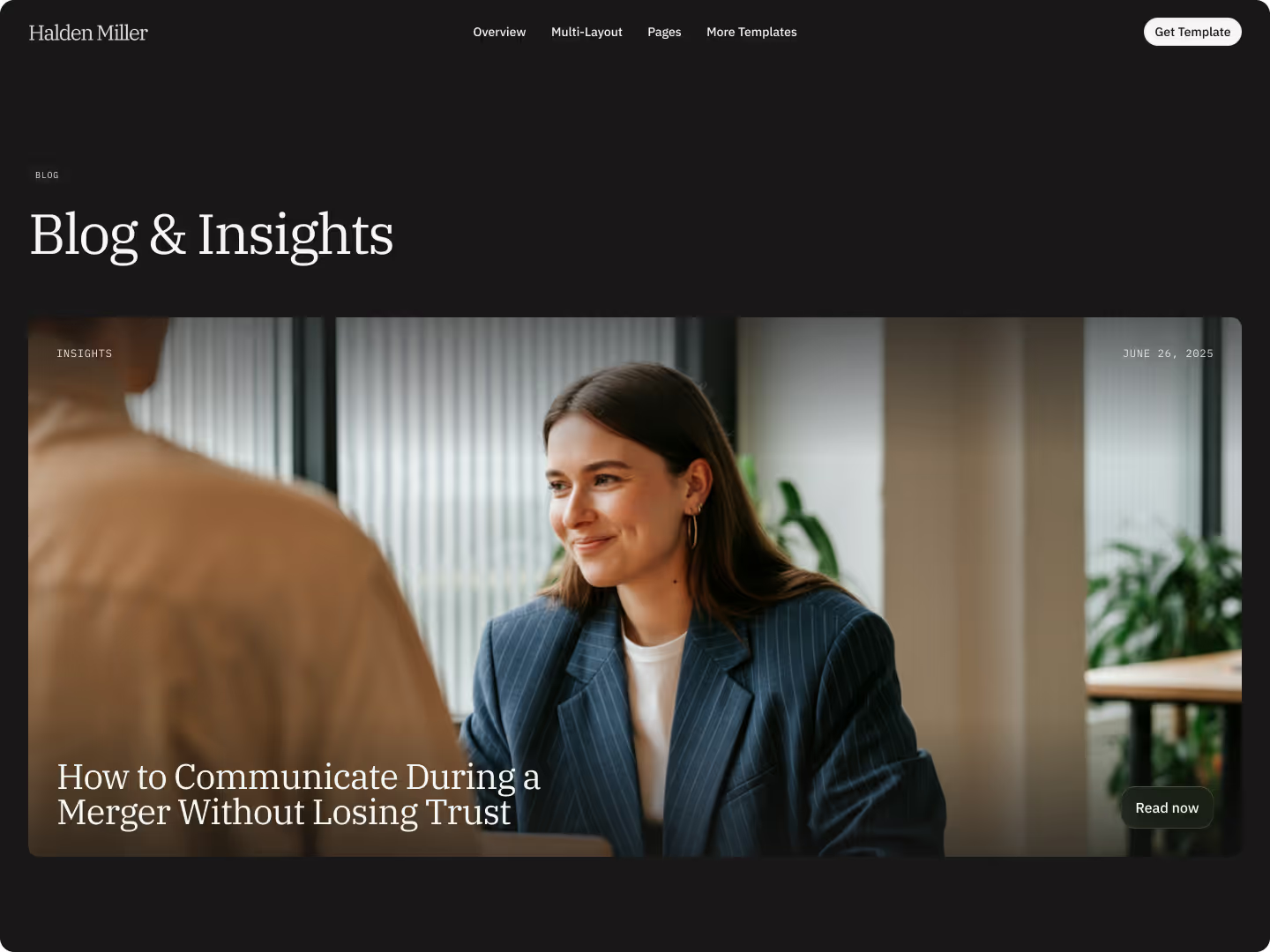
How to Talk About a Merger So People Actually Listen
Mergers succeed or fail on trust. And trust is built — or lost — in how leaders communicate when change is most visible. If you want people to follow, give them more than numbers. Give them a story they can believe in and steps they can rely on.
Get Ahead of the Rumor Mill
Most leaders wait until the deal is signed to talk. By then, people have already filled the silence with speculation. Even if you can’t share every detail, acknowledge the process early. A simple “Here’s what we know, here’s what we don’t, and here’s when we’ll update you” goes further than silence.

Get Your Leadership Team on the Same Page
Mixed signals from the top are deadly. Before anyone speaks externally, leadership must agree on the core story: the reason for the deal, the intended benefits, and the immediate next steps. If leaders contradict each other, trust collapses instantly.
Press releases and investor briefings are necessary, but employees and clients need a different message. Translate the business logic into human terms: What does this mean for my job? My team? My contract? Avoid the trap of one-size-fits-all messaging.
The first announcement isn’t the end — it’s the beginning. Keep communication consistent, scheduled, and two-way. Regular updates, Q&A sessions, and transparent progress reviews prevent fear from creeping back in. Silence after Day One is almost as damaging as silence before it.
Go Beyond the Vision: Map Out the Next Steps
Big promises about “new opportunities” ring hollow if people don’t see how they’ll get there. Be specific about timelines, integration steps, and what will remain unchanged. Certainty in the short term matters more than grand visions of the future.

The Conversation Doesn't End on Day One
The first announcement isn’t the end — it’s the beginning. Keep communication consistent, scheduled, and two-way. Regular updates, Q&A sessions, and transparent progress reviews prevent fear from creeping back in. Silence after Day One is almost as damaging as silence before it.
What Are Sales Training and Development?
Investing in your sales team is a direct investment in your revenue. But "investment" can mean different things. The terms "sales training" and "sales development" are often used interchangeably, but they address distinct needs for your team. Understanding the difference helps you build a program that not only improves today's performance but also prepares your top talent for tomorrow's challenges. It’s about creating a system that supports your reps at every stage of their career, ensuring they have the tools to succeed right now and the path to grow with your company long-term.
Think of it as a two-part strategy for building an unstoppable sales force. One part sharpens the skills your team uses every day to close deals and hit quotas. The other part builds the strategic thinking and leadership qualities that turn great reps into future sales leaders. Both are essential for sustainable growth, reducing turnover, and creating a culture where people want to build their careers. A balanced approach ensures you’re not just fixing immediate skill gaps but are also building a strong foundation for the future of your sales organization.
Sales Training: Honing Current Skills
Sales training is all about the here and now. It consists of focused programs designed to make your sales team better at their current jobs. The goal is to equip them with the specific skills and knowledge needed to perform effectively and meet their targets today. This includes everything from mastering sales methodologies and understanding your product inside and out to learning how to manage customer relationships more effectively. According to Edyoucated, effective sales training directly addresses the immediate needs of the sales role, ensuring every team member has the competency to succeed in their day-to-day tasks.
Sales Development: Preparing for Future Roles
Sales development, on the other hand, plays the long game. While training focuses on proficiency in a current role, development is about preparing employees for what’s next. It’s a forward-looking process aimed at long-term career growth and readiness for future responsibilities. This could involve mentorship programs, leadership coaching, or strategic projects that stretch an employee's capabilities beyond their current job description. As Highspot notes, this distinction is crucial; development is about cultivating potential and building a pipeline of internal leaders, which is key for scaling your organization and retaining your best people.
Core Components of a Powerful Sales Program
A truly effective sales program isn't a one-off workshop or a single online course. It's a comprehensive system built on a clear understanding of what your team needs to succeed. The most powerful programs integrate several key components to create a holistic learning experience that drives real results. This means moving beyond just teaching sales tactics and instead building a framework that covers product knowledge, customer-centric approaches, and a deep understanding of your unique sales process. When these elements work together, they create a consistent and repeatable path to success for your entire team.
Building this kind of program requires a strategic approach. You need to assess your team's current skills, identify gaps, and align your training initiatives with your company's broader revenue goals. It’s about creating a culture of continuous improvement where learning is part of the daily workflow, not a separate event. At RevCentric Partners, we help companies design these comprehensive systems, ensuring that every aspect of the sales program is aligned to accelerate growth. A well-structured program becomes the backbone of your sales organization, providing the support and clarity your team needs to thrive.
Key Training Areas for Comprehensive Growth
To achieve well-rounded growth, your sales training should cover a few critical areas. First is foundational sales skills—the art of prospecting, qualifying leads, presenting solutions, handling objections, and closing deals. Next is deep product knowledge; your team must be experts on what they sell to confidently communicate its value. Another key area is a customer-focused mindset, which involves teaching reps to listen, understand customer pain points, and build genuine relationships. Finally, you need to train them on your specific sales process, ensuring everyone follows the same proven steps from initial contact to a signed contract.
The Four Pillars of a Winning Sales Approach
Beyond specific training areas, a winning sales program is built on four core pillars that shape how your team operates. The first is Sales Attitude, which is all about fostering resilience, confidence, and a growth mindset. The second is Sales Strategy, which defines your ideal customer profile, your market positioning, and your overall go-to-market plan. The third pillar is the Sales Process, the repeatable set of steps your team follows to move a prospect through the pipeline. The final pillar is the Sales Pitch, which is the clear, compelling story your team tells to communicate value and differentiate your solution from the competition.
The Business Impact of Effective Sales Training
When you invest in effective sales training, you’re not just checking a box—you’re making a strategic move that directly impacts your bottom line. A well-trained sales team is more than just a group of good talkers; they are strategic partners in your company's growth. They understand the market, know your product inside and out, and can articulate its value in a way that resonates with customers. This leads to shorter sales cycles, larger deal sizes, and more consistent quota attainment across the board. The impact is felt in every part of the business, from revenue forecasts to company morale.
The ripple effects of great training extend far beyond just sales numbers. It creates a more confident and motivated team, which in turn improves customer interactions and strengthens brand reputation. When reps feel competent and supported, they are more likely to stay with your company, reducing the high costs associated with turnover and recruitment. Research from Highspot shows that companies with engaged employees are not only 17% more productive but also 21% more profitable. Ultimately, sales training is one of the highest-leverage investments you can make to drive sustainable, long-term success.
Driving Revenue and Profitability
The most direct benefit of sales training is its impact on revenue. When sales reps are equipped with the right skills and knowledge, they simply perform better. They become more efficient at identifying qualified leads, more effective at demonstrating value, and more skilled at closing deals. This improvement in individual performance naturally leads to an increase in overall sales and company revenue. As Edyoucated points out, the primary purpose of sales training is to make salespeople better at their jobs, which directly translates into selling more products or services and improving the company's profitability.
Improving Employee Retention and Reducing Costs
Investing in your team's growth shows them that you value their contribution and are committed to their career. This sense of being valued is a powerful driver of employee loyalty and retention. When people see a clear path for growth within the company, they are less likely to look for opportunities elsewhere. This stability reduces the significant costs associated with hiring and onboarding new employees, which can be a major drain on resources. A stable, experienced team also builds stronger customer relationships over time, creating a virtuous cycle of success and loyalty.
Enhancing Sales Performance and Confidence
Confidence is a critical, yet often overlooked, component of sales success. A confident salesperson is more persuasive, more resilient in the face of rejection, and better at building trust with customers. Effective sales training builds this confidence by giving reps a proven process to follow and the skills to handle any situation that comes their way. When they know they have the tools and knowledge to succeed, they approach their work with more energy and conviction. This increased confidence not only improves their individual performance but also contributes to a more positive and motivated team culture.
Methods and Best Practices for Sales Training
Designing an effective sales training program isn't just about what you teach; it's also about how you teach it. The right delivery method can make the difference between a program that inspires change and one that gets forgotten a week later. The best approach is often a blended one, combining different formats to cater to various learning styles and schedules. This could include a mix of live workshops, self-paced online modules, and one-on-one coaching. The goal is to create a learning environment that is flexible, engaging, and integrated into the team's daily workflow.
Beyond the format, several best practices can help ensure your training sticks. First, make it relevant. Training should be tailored to your specific industry, product, and sales process. Generic, off-the-shelf content rarely has the same impact. Second, make it continuous. A one-time event is not enough to create lasting change. Instead, build a culture of ongoing learning with regular reinforcement and coaching. This is where partnering with an external expert can be invaluable, as they can provide the structure and accountability needed to maintain momentum and drive scalable success.
Choosing the Right Training Method
Selecting the right training method depends on your team's needs, your budget, and your goals. There is no one-size-fits-all solution. Some topics, like role-playing complex negotiations, are best handled in person, where reps can get immediate feedback. Other topics, like learning about a new product feature, can be effectively delivered through online modules that reps can complete at their own pace. The key is to be intentional about your choices and select the format that best suits the learning objective. A thoughtful combination of methods will yield the best results.
Internal Workshops vs. External Experts
Running training internally with your own sales leaders can be great for reinforcing your company's specific processes and culture. However, bringing in external experts offers a fresh perspective and specialized knowledge that your internal team may not have. External partners can introduce new methodologies, challenge old assumptions, and provide unbiased feedback. They also bring a level of focus and structure that can be difficult to achieve when you're juggling training with other responsibilities. Often, the ideal solution is a hybrid model that leverages both internal and external resources.
Online Courses and E-Learning Platforms
Online training platforms offer incredible flexibility and scalability, making them a popular choice for modern sales teams. They allow reps to learn at their own pace and on their own schedule, which is especially valuable for remote or geographically dispersed teams. E-learning can be used for a wide range of topics, from foundational sales skills to ongoing product updates. To make online training effective, it's important to choose a platform that is engaging and interactive, and to supplement it with live sessions or coaching to reinforce the material and answer questions.
Fostering a Culture of Continuous Learning
The most successful sales organizations treat learning as an ongoing process, not a one-time event. Fostering a culture of continuous learning means encouraging your team to always be improving their skills and knowledge. This can be done through regular coaching sessions, peer-to-peer learning, and providing access to resources like books, podcasts, and industry articles. When learning is embedded in your team's culture, it becomes a shared value that drives everyone to be their best. This commitment to ongoing development is essential for staying competitive and adapting to changing market conditions.
Making Training Interactive and Engaging
Passive learning, like listening to a lecture, has notoriously low retention rates. To make your sales training stick, you need to make it interactive and engaging. Incorporate activities like role-playing, group discussions, and real-world case studies that require active participation. Simulations and gamification can also be powerful tools for making learning more fun and memorable. The more you can get your team actively involved in the learning process, the more likely they are to absorb the material and apply it in their daily work. Engagement is the key to turning training into tangible results.
Frequently Asked Questions
What's the simplest way to understand the difference between sales training and sales development? Think of it this way: sales training gives your team the skills they need to win today, in their current role. It focuses on immediate performance, like mastering a new closing technique or learning your product's latest features. Sales development is about preparing them for tomorrow. It builds the strategic thinking and leadership qualities that turn a great salesperson into a future sales leader, ensuring you have a strong bench of talent ready for new challenges.
How do I decide whether to use an internal manager or an external expert for training? Using your internal leaders is great for reinforcing your company-specific sales process and culture. They know your business inside and out. However, an external expert brings a fresh perspective and specialized frameworks that can challenge outdated habits and introduce new, proven strategies. Often, the best approach is a partnership that combines the internal context from your managers with the specialized expertise of an outside consultant.
How can we ensure that our investment in training leads to lasting change? The key is to stop treating training as a one-time event. Lasting change comes from creating a system of continuous learning. This means the initial training session should be followed by consistent coaching, reinforcement, and opportunities for your team to apply what they've learned in real-world scenarios. It’s about integrating learning into the daily workflow, not just scheduling a workshop once a year.
Our sales team is already hitting its targets. Why should we invest in more training? Meeting targets is great, but it doesn't mean your team has reached its full potential. Consistent training helps good teams become great by making their success more repeatable and scalable. It can shorten sales cycles, increase average deal sizes, and build the confidence needed to tackle more complex accounts. It's an investment in future-proofing your revenue engine, not just maintaining the status quo.
What are the first steps to building a better sales training program? Start by getting a clear picture of where your team stands right now. Talk to your reps and managers to identify the specific skill gaps or process bottlenecks that are holding them back. Once you know the problem you're trying to solve, you can align your training goals with your overall business objectives. A targeted program that addresses a real, identified need will always be more effective than a generic one.
Key Takeaways
- Distinguish between training and development: Use sales training to sharpen the skills your team needs to hit today's targets, and use sales development to prepare your best people for future leadership roles.
- Create a culture of continuous learning: Move beyond one-off workshops by building a comprehensive program that integrates ongoing coaching and reinforcement into your team's daily routine.
- Connect training directly to business goals: A strategic investment in your sales team does more than improve skills; it drives revenue, increases employee retention, and builds the confidence needed for consistent performance.
Related Articles
- Ultimate Guide: Training & Development of Sales Personnel
- 7 Best Sales Training Seminars to Boost Revenue
- 9 Best SaaS Sales Training Programs for 2026
- How Recruitment and Training Builds an Efficient Sales Force – RevCentric Partners